CSRD and Omnibus 2026: What do the new changes mean for the construction and real estate industry?
Over the past year, CSRD (Corporate Sustainability Reporting Directive) has been one of the most discussed regulations in sustainability and corporate reporting. At the same time, the EU has presented the so-called Omnibus package, which aims to simplify reporting requirements and reduce the administrative burden on companies.
For many actors in the construction and real estate industry, this raises a natural question:
Do we still need to prepare for CSRD?
The short answer is yes.
Even if the regulation is being adjusted, the long-term direction is clear: requirements for transparency, sustainability data and traceability will continue to grow throughout the entire value chain of the construction sector.
What is the Omnibus package?
Omnibus is the EU's initiative to simplify several sustainability-related regulations, including CSRD.
The proposed changes include:
- Fewer companies are directly covered by the reporting requirements
- Some timelines are postponed
- The number of reporting points is expected to decrease
- Companies are to be protected from unreasonable information requests from larger actors
At the same time, a comprehensive review of the ESRS standards (European Sustainability Reporting Standards), which govern how sustainability reporting is to be carried out in practice, is underway.
The revised standards are expected to be presented in the second half of 2026 and to apply from 2027.
What do CSRD and Omnibus mean for the construction industry?
Many interpret Omnibus as meaning that sustainability requirements are disappearing. That is a misconception. For the construction and real estate industry, it is rather the opposite.
Property owners, investors, developers and larger contractors will continue to need to be able to report on:
- Climate impact from projects
- Material and product choices
- Supply chains
- Work environment
- Energy use
- Waste management
- Sustainability-related risks
Even if reporting is simplified, the need for reliable data will remain.
From regulatory requirements to business advantage
The most successful companies will probably not be those that produce the most sustainability data.
They will be the ones with the best control over it.
When project information is structured and accessible, it becomes easier to:
- Handle customer requirements
- Participate in procurements
- Follow up on sustainability goals
- Create traceability
- Reduce risks
- Streamline project management
It is no longer just about compliance.
It is about competitiveness.
Digital project management becomes a strategic issue
As sustainability requirements evolve, digital project management becomes an increasingly important part of operations.
Many construction and real estate companies already sit on the information that is being requested.
The challenge is that it is often scattered across:
- Excel files
- Shared folders
- Binders
- Several different systems
When the information is gathered on a common platform, better conditions are created for traceability, quality assurance and collaboration.
How can Projsite help?
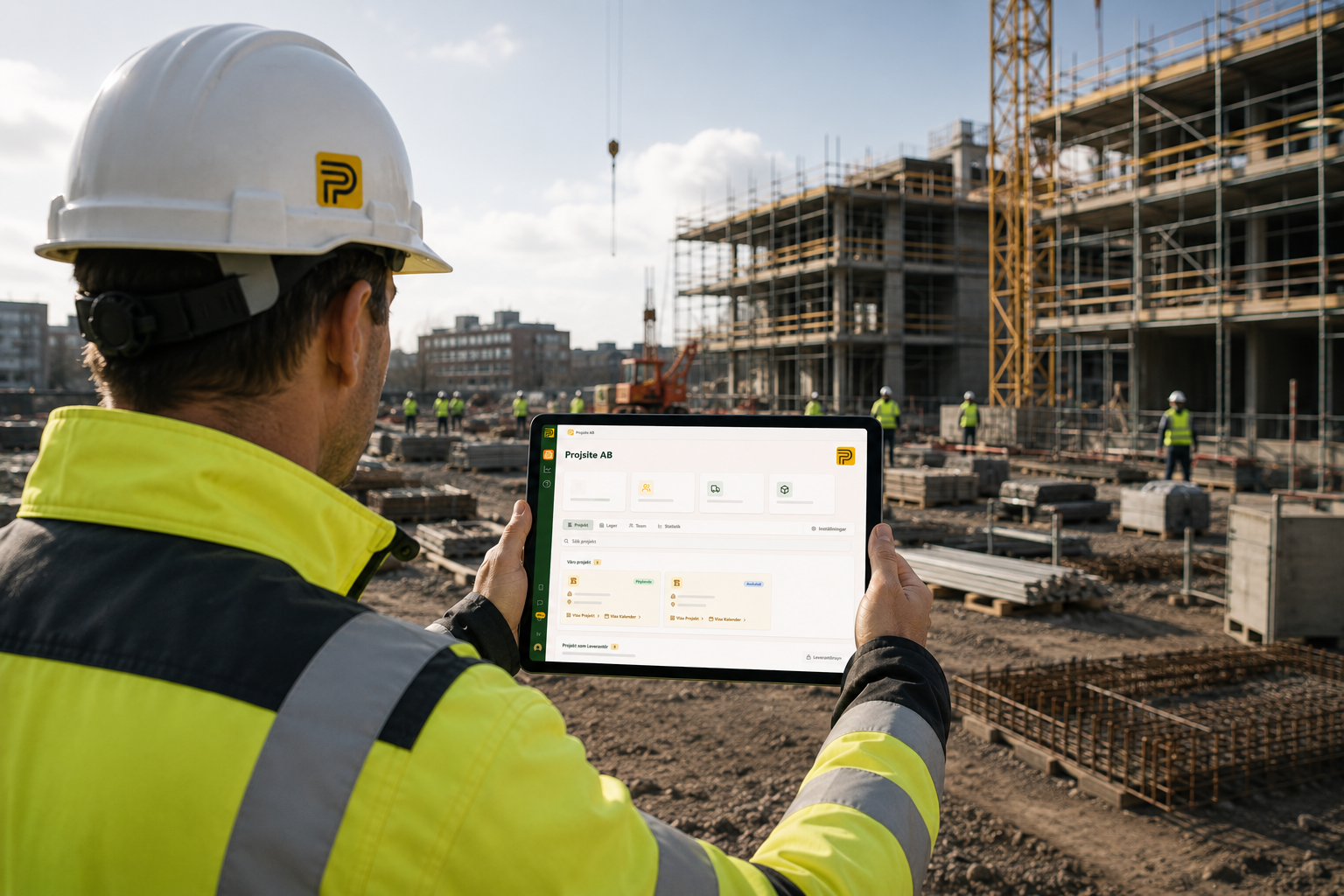
Projsite helps construction and real estate companies gather project information, documentation and communication in one place.
By creating structure in projects, it becomes easier to:
- Follow up on the project's development
- Ensure documentation
- Manage supplier information
- Create traceability
- Prepare the business for future sustainability requirements
Regardless of how CSRD and Omnibus evolve in the coming years, one thing is clear:
Companies that have control over their project data will be better equipped for the construction projects of the future.
Summary
Omnibus means that CSRD is being simplified and that some requirements are being postponed. But for the construction and real estate industry, the fundamental direction is not changing.
The requirements for transparency, sustainability data and traceability will continue to increase.
The competitive advantage of the future is therefore not just about sustainability.
It is about being able to show it.
And that starts with order in your project information.